Augusta Under Pressure: What Elite Golf Teaches Us About Peak Performance
There is no performance environment quite like the Masters. Augusta National subjects its competitors to a singular combination of stressors, a course that demands complete technical mastery, a history so heavy it can alter a player’s psychology on its own, and a live audience of tens of thousands positioned just feet from the action, with millions more watching globally. Every swing, every decision, every visible reaction is scrutinized in real time.
For sport performance professionals, it is one of the richest annual case studies in existence. And the 2026 edition, in which Rory McIlroy became only the fourth player in 90 years to win back-to-back green jackets, delivered lessons that go to the heart of what elite performance actually requires.
The four pillars on display at Augusta
What made McIlroy’s performance and the performances of the players who pushed him hardest so instructive, was how clearly each player illustrated one or more of the core pillars of elite sport performance. The Masters doesn’t just reveal who is talented. It reveals who has built the complete athlete.
Deliberate Practice
Skill so deeply embedded it executes under maximum pressure without conscious effort.
Performance Mindset
The ability to reframe pressure as opportunity rather than threat — in real time.
Support Systems
Caddy, coaches, and family providing the relational scaffolding that sustains peak output.
Stress Regulation
Physiological and psychological management of competition arousal across four rounds.
Deliberate practice: when preparation becomes instinct
Augusta National is a course that cannot be navigated by improvisation. Its undulating greens, its wind-tunneled par-3s, its penalty-rich second shots — all of it demands a depth of technical rehearsal that goes far beyond what a casual preparation cycle produces. The players who perform on Sunday have spent years building Augusta-specific competence: shot shapes, bail-out zones, putting reads, yardage books refined across multiple tournament appearances.
McIlroy’s defining shot of the final round, his tee ball at the 12th hole, “Golden Bell”, illustrated what this preparation produces under fire. With the tournament in the balance, he committed to a precise, aggressive line on the most dangerous hole on the course. There was no hesitation. The decision was made before he reached the tee. Thousands of repetitions in practice had removed the mechanics from conscious processing, leaving the mind free to compete rather than calculate.
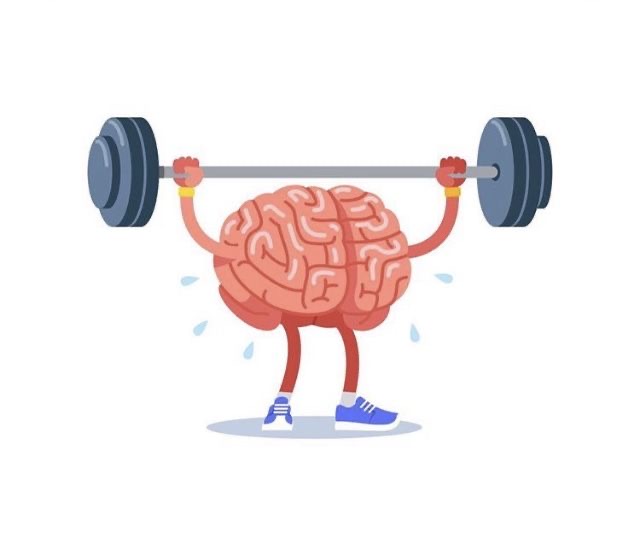
This is the neurological outcome of deliberate practice: the skill becomes automated. Under high-stress conditions, conscious cognitive bandwidth narrows significantly. Athletes who rely on technique they haven’t fully automated find that technique degrading precisely when they need it most. Those who have overlearned their craft, who have practiced not just until they get it right, but until they cannot get it wrong, are the ones whose performance holds or improves under pressure.
The Masters doesn’t create capability, it reveals the depth of preparation that was already there.
Support systems: the team behind the individual
Golf presents itself as an individual sport. It is not. At Augusta, every player is the visible expression of a high-performance support network: a caddy who functions as an in-competition decision-support partner, technical coaches who have spent months optimizing the player’s movement patterns and mental frameworks, and family whose role in psychological grounding is consistently undervalued in public commentary.
McIlroy’s caddy Harry Diamond was beside him for every critical decision on Sunday, including when to attack, when to manage, how to process the double-bogey at four and the bogey at six without allowing the scorecard damage to compound into a psychological collapse. This is the caddy’s primary performance function: not carrying the bag, but serving as an external regulator when the player’s internal state is under siege.
The research on high-performance support systems consistently confirms what Augusta makes visible: elite performers do not sustain peak output alone. The quality and consistency of the relational support around an athlete is one of the strongest predictors of performance under sustained competitive pressure. Building that support system and trusting it when it matters most is not a soft variable. It is a performance variable.
Stress regulation: reframing the pressure environment
The competitive conditions at Augusta on a Sunday afternoon are extreme by any standard. Crowds of tens of thousands line every fairway, positioned within feet of each shot. Television cameras capture every facial expression. The historical weight of the tournament adds a layer of cognitive load that has no equivalent in most sports. And the scoring system means that a single hole can shift a two-shot lead into a deficit in under three minutes.
McIlroy experienced all of this acutely. After holding a record six-shot lead at the 36-hole mark, he entered Sunday tied for the lead and then gave further ground early. By the time Cameron Young and Justin Rose had both seized the top position on the back nine, McIlroy was in territory that has historically broken elite players at Augusta. Greg Norman’s 1996 collapse from six shots ahead remains the sport’s benchmark cautionary tale.
What followed was a textbook example of arousal regulation and attentional refocusing. Rather than narrowing attention onto the leaderboard, a cognitive trap that research consistently links to performance deterioration, he redirected toward the process: the next shot, the next decision. Birdies at 12 and 13 resulted not from playing more aggressively, but from executing the game plan established long before the round began.
The physiological response to pressure and the physiological response to excitement are nearly identical. Elite performers learn to choose the interpretation.
This is the core of stress regulation in competition: not the elimination of arousal, but its reappraisal. The crowds are not a threat, they are evidence that this moment has meaning. The cameras are not surveillance, they are a stage. The pressure is not something to be managed down. It is fuel to be directed. McIlroy’s back nine on Sunday demonstrated an athlete who has done enough work in this domain that the reappraisal happens almost automatically.
The performance mindset: choosing the opportunity
Underpinning all of the above is a set of beliefs and orientations that determine how an athlete relates to high-stakes competition itself. The players who consistently perform at Augusta and the players who falter despite the talent to win, often differ less in physical skill than in the psychological framework through which they experience the event.
The best performers at Augusta carry what sport psychologists describe as an approach orientation: a tendency to move toward the challenge rather than away from its risks. They are not trying to avoid losing. They are pursuing winning and they experience the enormity of the crowd, the history of the place, and the weight of the moment as confirmation that they are exactly where their preparation was supposed to lead them.
McIlroy is now one of four players in Masters history to wear the green jacket in consecutive years, alongside Nicklaus, Faldo, and Woods. His six major titles equal Faldo’s European record. None of it happened because the pressure was absent. It happened because he has built, across years of deliberate practice, intentional support, and psychological development, the capacity to perform precisely because the pressure is present.